Gemini Space Station (Nasdaq: GEMI) has filed to offer up to $50 million in unsecured notes to U.S. individuals through their Gemini accounts. The crypto exchange says it intends to use the proceeds to fund margin loans, though it could also use the money for general corporate purposes. Gemini would set the interest rate. It has not disclosed the initial rate, and it cannot sell the notes until the registration statement becomes effective.
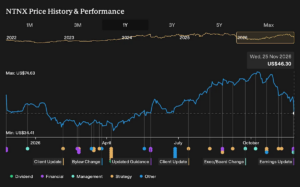
Gemini’s 7.3% share-price gain on Nov. 25, 2026, preceded the public filing. AInvest data show the stock closed at $1.405, up from $1.31. The Securities and Exchange Commission accepted the registration statement at 4:59:57 p.m. Eastern, nearly an hour after the close, and the offering announcement reached its EDGAR system at 5:06 p.m. Shares traded mostly between $1.38 and $1.41 in thin after-hours trading, offering little evidence of how investors viewed the proposal.
What customers would own
A customer buying Gemini Premium Yield Notes would lend at least $1,000 to the parent company. A committee of three Gemini employees would set the floating rate and could change it with 30 days’ notice. The prospectus says committee members “have a duty to act in Gemini’s best interest” and that the rate “does not necessarily bear any relation to the risks associated with or changes in our creditworthiness.”
The notes would have no maturity date. Holders could request repayment, but Gemini would have until the first business day after 30 calendar days to pay. It could extend that period by another 30 days if it determined that “Extreme Market Conditions” existed, including crypto-market volatility, exchange trading disruptions or material credit failures in the crypto market. Gemini could redeem the notes at any time. Holders, by contrast, could not transfer them or sell them on a secondary market.
The notes would carry no credit rating, FDIC insurance or SIPC protection, and Gemini would hold no reserves against them. In a liquidation, the parent’s principal asset is its stake in Gemini Space Station LLC. Creditors of the subsidiaries, which had about $591.8 million in principal debt outstanding at Sept. 30, would have first claim on subsidiary assets. Noteholders would rank alongside the parent’s other unsecured creditors and could lose principal as well as accrued interest.
How the proposed borrowing compares with Gemini’s loan book
Gemini reported $7.2 million in combined on-exchange and margin loan receivables at Sept. 30, up from zero at Dec. 31, 2025. The full offering would be roughly seven times that loan book. Gemini has not disclosed what it charges margin borrowers, so neither side of its prospective lending margin is public. For scale, a two-percentage-point spread on the full $50 million would generate about $1 million a year before credit losses. Gemini used $166.9 million in cash in operations in the first nine months of 2026.
Customer borrowing could diversify Gemini’s funding. At Sept. 30, it owed $367.2 million to Winklevoss Capital Fund, a related party. Nearly all of that balance consisted of crypto-denominated loans that the fund could call on written notice for repayment by the end of the business day. Management said Gemini’s $194.1 million in cash, together with its remaining bitcoin and available borrowing capacity, was sufficient for at least the next 12 months.
The proposed notes differ from Gemini’s earlier Earn program, whose lending partner, Genesis Global Capital, went bankrupt. The new notes would be obligations of Gemini itself, with U.S. Bank as trustee. As of Nov. 1, Gemini faced 376 arbitrations from Earn users seeking interest beyond their bankruptcy recoveries.
The pricing supplement will disclose what Gemini is offering customers for taking its unsecured credit risk. Using nine months of interest expense and average opening and closing debt balances from Gemini’s quarterly filing, AInvest estimated annualized borrowing costs of about 9% on secured third-party loans and 6.5% on debt secured by credit-card receivables. Those figures provide a comparison, not a promised yield: customers buying the proposed notes would have no collateral.