S&P Global Ratings placed Nvidia’s AA credit rating on CreditWatch with negative implications on Nov. 25, 2026. The agency said it could lower the rating to AA- within 90 days if weaknesses in the chipmaker’s management and governance persist. A larger cut would be possible only if investigations or disclosures led S&P to conclude that Nvidia’s reputation or future prospects had also suffered.
For S&P analysts Andrew Chang and David Tsui, Jensen Huang’s departure and return as CEO left two questions unresolved: how effectively Nvidia’s board oversees executive conduct and who could succeed Huang. S&P also said questions about possible export control violations raised concerns about Nvidia’s internal controls and how it manages the geopolitical risks of its exposure to China.
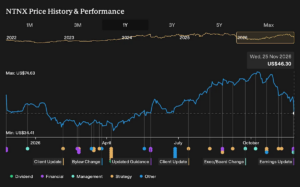
Nvidia’s board voted unanimously to reinstate Huang less than two weeks after Chairman Harvey Jones said directors did not intend to bring him back. Nvidia shares rose as much as 36% during the Nov. 23 session, but by Nov. 25 they were about 12.5% below their Nov. 23 closing price.
S&P said some directors’ long tenures could compromise their independence. Jones and early investor Tench Coxe have served on the board since 1993, and Brooke Seawell joined in 1997. Mark Stevens served from 1993 to 2006 and returned in 2008. S&P said it was unaware of any corrective action by the board and planned to meet with directors and management to discuss board independence, executive oversight and leadership succession.
S&P had upgraded Nvidia from AA- to AA, its third-highest rating, shortly before the company priced $25 billion of investment-grade senior notes in June. The notes mature between 2028 and 2056. According to Bloomberg, Nvidia has about $32.5 billion of bonds in the U.S. high-grade corporate bond index. A downgrade could weigh on bond prices, push yields higher and raise Nvidia’s borrowing costs.
Moody’s Ratings had separately revised its outlook on Nvidia from positive to stable on Nov. 18, citing governance concerns. It left that outlook unchanged after Huang’s return.