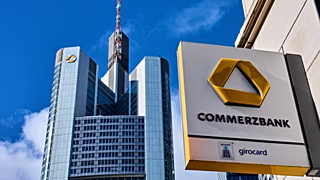
UniCredit secured the last regulatory approval needed to take delivery of its Commerzbank shares on Nov. 26, 2026. The same day, it asked the German lender to call an extraordinary shareholder meeting to replace nine of the ten shareholder representatives on its supervisory board. UniCredit proposed Orcel as chairman.
The distinction between the two steps matters: regulatory clearance allows the share exchange to settle on Dec. 7, but it does not install UniCredit’s nominees. If shareholders approve the slate, UniCredit could shape management appointments without owning a majority of Commerzbank. Under Germany’s two-tier board system, the supervisory board appoints and dismisses the executives who run the bank.
What the share offer buys
UniCredit had accumulated roughly 30% of Commerzbank over two years before its offer closed in July. Shareholders tendered another 17.6% of Commerzbank’s capital. In return, UniCredit is issuing about 96 million shares, worth roughly €7 billion at its Nov. 27 share price. The roughly €40 billion figure implied by the offer is a valuation of all of Commerzbank, not the amount UniCredit is paying for the tendered shares.
The exchange ratio stayed fixed at 0.485 UniCredit shares per Commerzbank share. As UniCredit’s stock price moved, the value per tendered share rose from about €30.80 in April to €37.33 on June 16. At UniCredit’s Nov. 27 price of €76.13, it stood at about €36.92.
Germany’s government rejected the offer on June 16, saying it “does not include an appropriate premium” and calling UniCredit’s approach “aggressive.” Five months later, Berlin agreed to the takeover after securing eight binding commitments rather than a higher exchange ratio. These included keeping Frankfurt as the base for German operations, retaining Commerzbank’s stock listing and German joint-stock legal form, supporting lending to midsize businesses and continuing union agreements. The government did not tender its shares and retains a 13.3% stake.
Why UniCredit stopped short of 50%
Commerzbank owns 69.1% of Poland’s mBank. Crossing the 50% threshold at Commerzbank would oblige UniCredit to make a cash offer for mBank’s remaining listed shares, at an estimated cost of €3.8 billion. UniCredit has said it wants to avoid that obligation. Its Commerzbank holding will stand at 47.59% of capital, well below the 95% required under German law to force out remaining shareholders.
Commerzbank’s choice of how to return capital could nevertheless affect UniCredit’s share of the vote. The German bank reported a Common Equity Tier 1 (CET1) capital ratio of 14.2%, above its 13.5% target, and had roughly €2 billion to €2.1 billion left to distribute. Treasury shares carry no votes, so a €2 billion buyback at the Nov. 27 price could push UniCredit above half of voting rights without it buying another share. A dividend would not have that effect. Whether a change in voting rights alone would trigger an mBank offer depends on how Polish authorities measure the threshold.
The cost to UniCredit’s capital and earnings
UniCredit estimates the transaction will absorb 2 to 2.25 percentage points of CET1, a measure of equity capital relative to risk-weighted assets. It reported a 15% ratio in September and expects to remain above 13% after the deal. With its policy of distributing 80% of profit unchanged, the size of the remaining capital buffer matters for future buybacks.
The exchange also sets an earnings hurdle. At the offer’s implied valuation of roughly €40 billion, Commerzbank is valued at about 11.4 times its forecast 2026 net income of €3.5 billion. UniCredit’s own shares were valued at about 9.9 times earnings, based on its €114 billion market value and guidance for profit “well above” €11.5 billion before extraordinary charges.
On those figures, Commerzbank would need to earn roughly €500 million more after tax than its forecast for the exchange to leave UniCredit’s earnings per share unchanged. Orcel has discussed a €1.4 billion cost programme. How much it could contribute depends on how much of the expected saving Commerzbank has already included in its forecast.