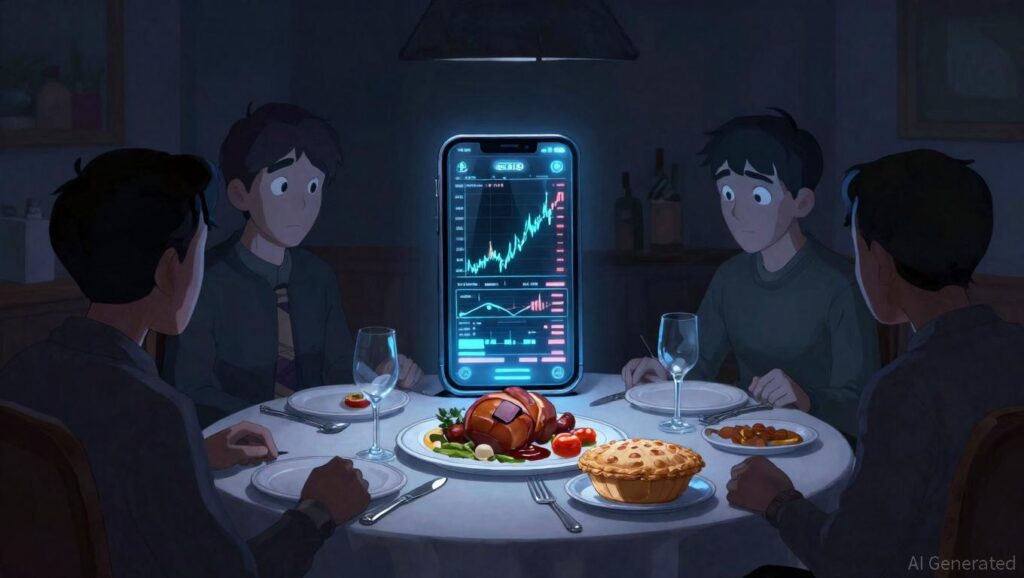
Of nearly nine million tokens launched on Pump.fun, 79% recorded no trades after launch day, according to a study by blockchain analytics firm Bitquery. For someone weighing a memecoin pitch, that finding points to a risk a price chart cannot show: an early buyer can have a large gain on paper and still have no one to sell to.
In a February 2025 staff statement, the U.S. Securities and Exchange Commission’s Division of Corporation Finance described meme coins as “akin to collectibles.” The coins it described offer no yield or claim on a business’s income or assets. Their value instead comes from “speculative trading and the collective sentiment of the market.” The division said purchasers and holders of those coins are not protected by federal securities laws. A holder need not encounter fraud to suffer a loss; demand can simply disappear.
What TRUMP’s peak valuation measured
Bloomberg reported that two Trump affiliates, CIC Digital and Fight Fight Fight, received 80% of the one billion TRUMP tokens, subject to a three-year unlocking schedule. That left 200 million tokens outside the affiliates at launch. CIC Digital also earns revenue when the coin trades, Bloomberg reported, and the president reported $636 million in earnings from the token in 2025. Trading revenue gives the affiliate a source of income that ownership of the token itself does not confer.
At TRUMP’s peak price of $75.35, as recorded by CoinMarketCap, the 200 million tokens implied a market value of about $15 billion. Applying the same price to the full billion produced a fully diluted valuation of roughly $75 billion. Neither figure measured how much buyers were prepared to pay if holders sold in quantity. The roughly $60 billion difference came from applying the price of the last trade to the affiliates’ allocation, which was scheduled to unlock over time.
By November 26, 2026, TRUMP was trading near $0.87, about 98.8% below its high. A $1,000 purchase at the peak would have bought about 13.3 tokens, worth roughly $11.55 at the later price.
Who buys first on Pump.fun
In a separate analysis reported by crypto.news, Bitquery examined about 8.2 million Pump.fun launches between October 30, 2025, and October 7, 2026. It found outside wallets buying in the first trading block in 38% of launches, suspected developer-linked wallets in 21%, and automated traders known as sniper bots in 28%. Bitquery estimated that developers and bundled wallets earned at least $579 million after fees through the end of June 2026. Pump.fun, meanwhile, had spent about $463.5 million buying back and burning its own PUMP token as of September 25.
In November 2026, Pump.fun announced a fee on purchases and sales made in the same block in which a token is created, with a scheduled start of December 4. The wallet that creates the token would be exempt. The announced change would therefore raise the cost of the earliest trades for other participants without charging the creator’s wallet the same fee.
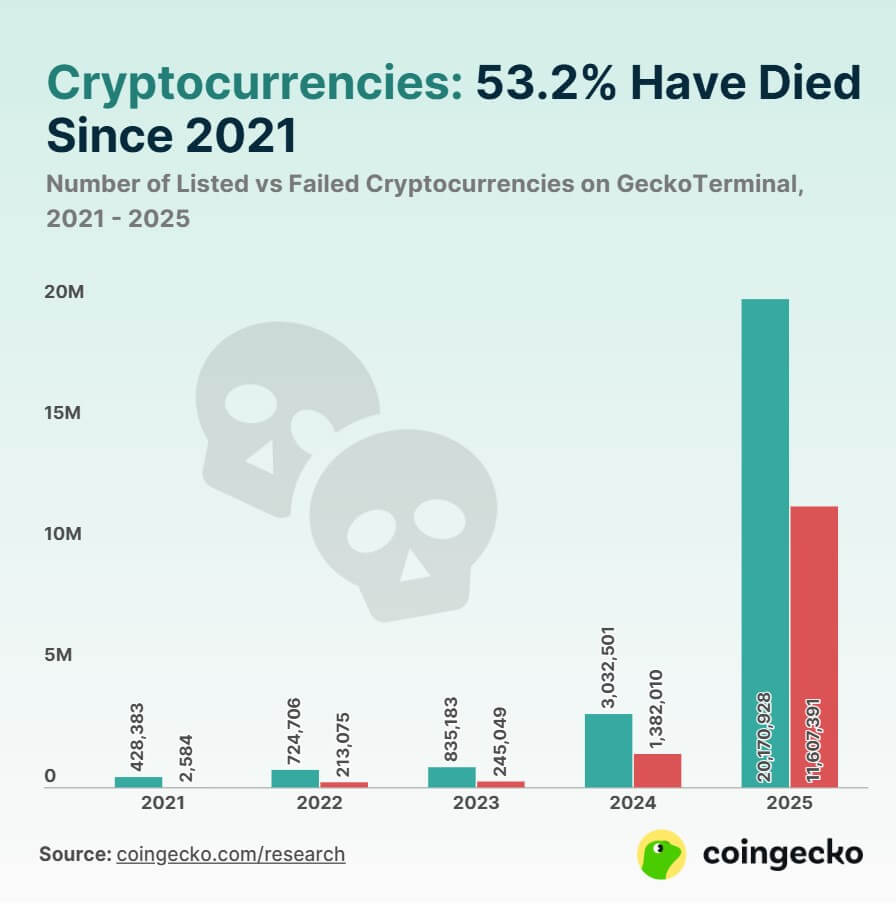
Loss of an active market was not confined to one launchpad. A CoinGecko analysis charted by CryptoSlate in January 2026 found that 53.2% of the 25.2 million tokens listed on GeckoTerminal since mid-2021 were no longer active. Of those roughly 13.4 million inactive tokens, 11.6 million had ceased activity in 2025, including 7.7 million in the fourth quarter. Those figures cover GeckoTerminal listings broadly, not just memecoins, and measure inactivity rather than losses on individual trades.
What a promotion can—and cannot—show
Trump gala announcements illustrate how the response to a promotion can change. In the two weeks after each of the first two announcements, TRUMP trading volume rose to four to eight times its previous level, and open interest—the value of outstanding futures positions—more than doubled, according to Kaiko data reported by Bloomberg. After the third announcement, volume fell about 35%, open interest changed little and the price fell 9%.
Organizers offered 185 seats for the third event. After the announcement, a wallet associated with the team transferred about $17 million worth of TRUMP to the OKX exchange. The transfer was observable; whether any tokens were sold was not clear. Nor do the volume figures alone establish why the third announcement drew a different response.
The same distinction matters in a personal pitch. A screenshot can show the quoted value of a position. A public wallet address can show what that wallet bought and sold, while a quote for selling the entire position can show whether a trade of that size is available and how far its price differs from the one on screen. Ownership concentration, the creator’s ability to mint more tokens and upcoming insider unlocks help explain how much additional supply could reach the market. None guarantees a buyer. When the person making the pitch still holds the token, that person’s paper gain and the next buyer’s demand are two sides of the same prospective sale.