Treasury prices fell on Nov. 23, 2026, as Nvidia shares jumped 31% after its board reinstated Jensen Huang as chief executive. The S&P 500 rose 4.7% and the Nasdaq 100 gained 6.5%. The 10-year Treasury yield ended a five-session decline, while the two-year yield rose about three times as much as the 10-year yield, according to Dow Jones Newswires. The larger move in the two-year note, which is more sensitive to the Federal Reserve’s next decisions, pointed to a shift in interest-rate expectations.
The reversal followed a week in which Treasuries had helped offset stock losses. By Nov. 20, the S&P 500 had closed at 6,910.39, down 11.6% from its October record of 7,818.93. The 10-year yield fell 24.4 basis points in the week to Nov. 20, ending at 4.909%. Because bond prices rise when yields fall, holders of the note gained as stocks sold off.
The cushion was modest. Using the S&P 500’s October closing high and the 10-year yield’s Oct. 5 peak as separate starting points, a portfolio with 60% in stocks and 40% in 10-year Treasuries would have lost roughly 5.8% through Nov. 20. Stocks subtracted about 7 percentage points from the portfolio’s value; bonds restored about 1.2 points. That estimate assumes a 10-year note’s price changes by roughly 7.5% for each percentage-point move in yield.
Why the cause of a selloff matters
The November selloff reflected concerns about AI and economic growth. March 2026 offered a different test: escalation in the Middle East lifted energy prices, and long-term government bond prices fell alongside stocks in the US, the euro area and the UK. A growth slowdown can leave central banks room to cut rates, supporting bond prices. A supply shock that raises inflation can limit that room even as stocks fall.
In an Oct. 16 Federal Reserve research note, Canlin Li and Emre Yoldas found that the correlation between daily US stock returns and changes in the 10-year yield was +0.40 from 2000 through 2021. In that period, falling stocks tended to coincide with falling yields and rising bond prices. Since 2022, the correlation had been −0.09. The researchers also found that an upside US inflation surprise moved the 10-year yield about three times as much after 2021 as before, while pushing stock returns down.
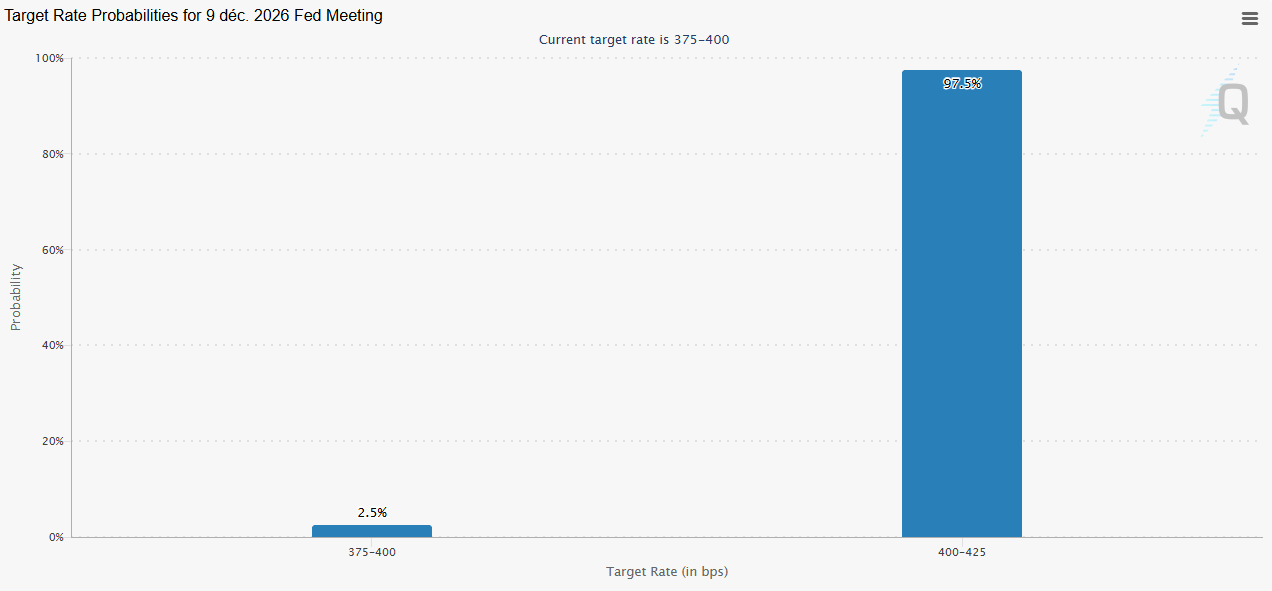
Inflation remained a constraint in October 2026. Core personal consumption expenditures inflation reached 3.3% year over year, up from 3.1% in September and above the 3.2% forecast, according to Bureau of Economic Analysis data summarized by Advisor Perspectives. The Fed raised its target range by a quarter point in September and held it at 3.75%–4.00% in October. Minutes released Nov. 18 showed broad support for further tightening. As of Nov. 25, CME FedWatch put the probability of a quarter-point increase on Dec. 9 at roughly 97%. That was market pricing, not a Fed decision.
A separate pressure on longer-term bonds
Borrowing also matters for longer maturities. The Bank of England’s November financial stability report estimated that large cloud-computing companies would issue more than $305 billion in bonds in 2026, about 8% of global investment-grade issuance. That borrowing adds to the supply of long-term debt investors must absorb alongside US government borrowing, though it was not the main driver of the Nov. 23 move.
In a February Fed research note, Daniel Covitz and Eric Engstrom estimated that the risk premium embedded in Treasury rates nine to ten years ahead had risen about 200 basis points over five years. They attributed the increase to supply-shock risk and federal deficits.
A 10-year yield near 4.9% therefore does not settle whether the note will cushion the next equity decline. If AI investment stalls and weaker demand brings rate cuts, longer-term Treasuries could gain as stocks fall. If another supply shock keeps inflation high, the two assets could lose value together, as they did in March. Li and Yoldas concluded that bonds’ ability to hedge stock losses is likely to improve if inflation pressures ease and adverse supply shocks become less frequent.