Apple accounted for 57% of U.S. smartphone shipments in the third quarter of 2026, up from 50% a year earlier, Counterpoint Research reported on Nov. 26. Total U.S. shipments fell 9%, and Apple was the only major manufacturer whose shipments did not decline.
The contraction explains about five of Apple’s seven percentage points of share gain. For every 100 phones shipped a year earlier, Apple supplied 50. A year later, the market shipped 91. Had Apple shipped the same 50, its share would have reached about 55%. Its reported 57% share implies it shipped about 52, a volume gain of roughly 4% based on the rounded figures. These are shipments to carriers and retailers, not purchases by consumers.
The distinction is clearer globally. Omdia put Apple’s worldwide shipments at 56.5 million phones, unchanged year over year, while the overall market fell 20% to 254.7 million. That was the lowest third-quarter total since 2013.
Why memory costs hit budget phones harder
Memory accounted for roughly 43% of the component cost of a premium smartphone in the third quarter of 2026, up from about 13% in the first quarter of 2025, according to Counterpoint. The share for NAND storage rose from 8% to 25%, while DRAM, a phone’s working memory, rose from 5% to 18%.
Those figures describe premium devices, but budget manufacturers have less room to absorb a cost increase. Counterpoint linked Motorola’s U.S. share decline, from 12% to 8%, to its reliance on lower-priced phones. Apple, by contrast, raised iPhone prices by $100 and maintained its global shipment volume. Its September-quarter iPhone revenue rose 17.5% to $57.58 billion, pointing to pricing and the mix of models shipped rather than unit growth.
Apple did not escape the cost pressure. After reporting a September-quarter gross margin of 47.9%, it forecast a holiday-quarter margin of 45% to 46%. It cited higher memory costs, a greater proportion of hardware sales and new Siri AI expenses. Apple also increased manufacturing purchase commitments by about $33 billion to secure supplies.
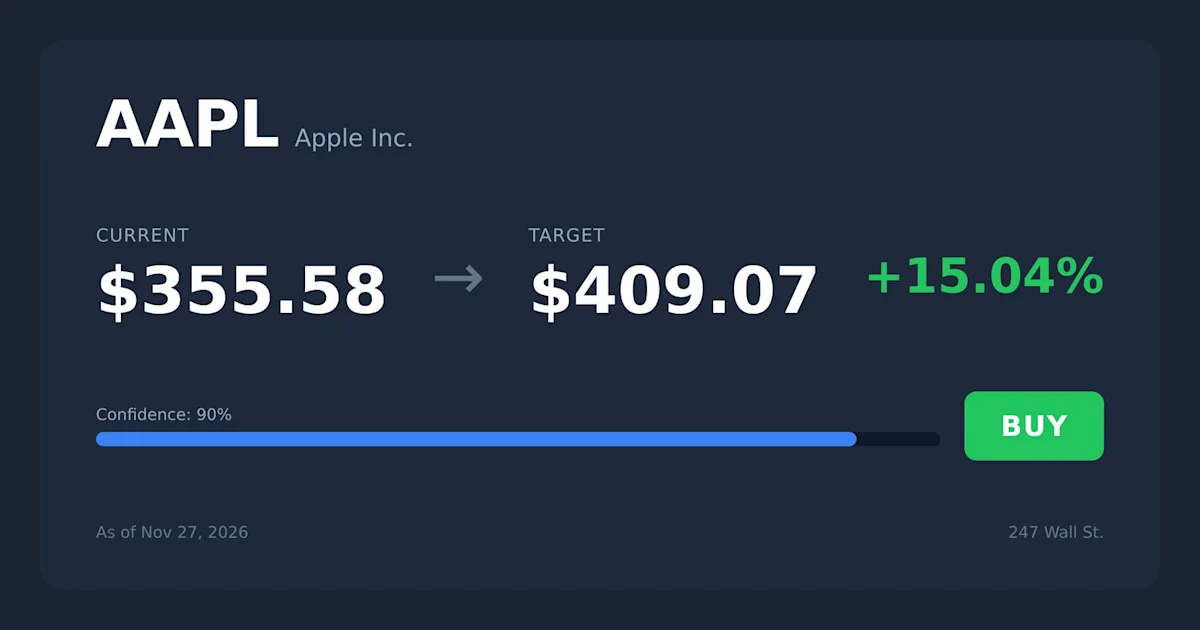
A separate 24/7 Wall St. stock-price graphic showed Apple at $355.58 alongside a $409.07 target, about 15% higher. Its “Buy” label and stated 90% “confidence” describe the publisher’s forecast, not a measured probability. The target is neither a shipment figure nor Apple’s guidance; Apple’s own outlook called for a lower margin.
The suppliers’ advantage depends on how long scarcity lasts
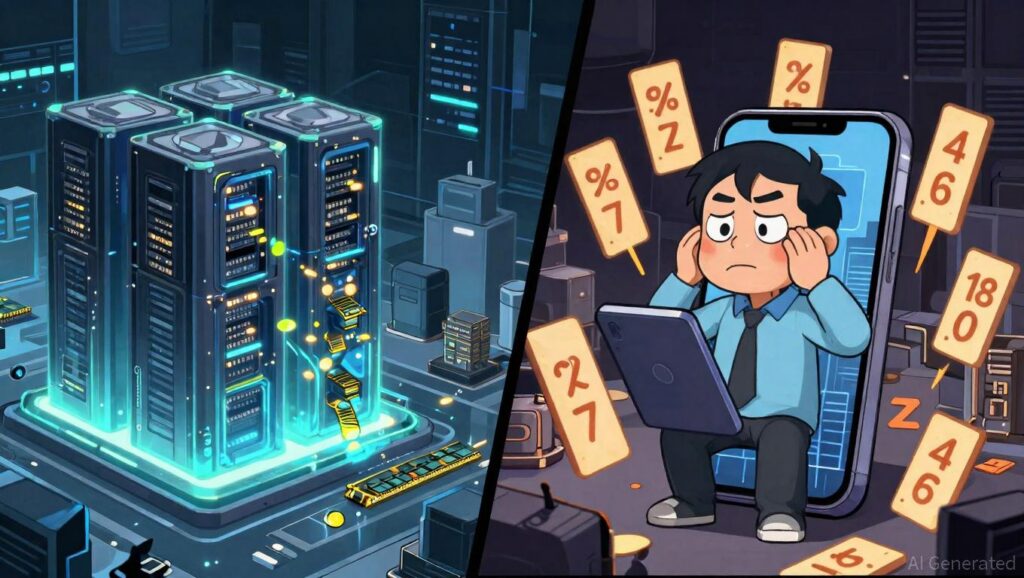
Phone makers are competing for memory with AI data centers. According to TrendForce, high-bandwidth memory and server modules accounted for 51% of DRAM supply in 2026 when measured in bits. SK Hynix reported third-quarter operating profit of 83.3 trillion won and said long-term agreements covered more than half its 2027–2028 capacity. Micron said more than 75% of its 2027 output was already committed.
For phone makers, higher prices can lift revenue even as shipments fall. IDC forecast that the global average smartphone selling price would rise 27.6% to $581 in 2026. It expected shipments to fall about 17% but the market’s value to rise 6.3% to $613 billion.
How long that pressure will persist remains uncertain. BNP Paribas expected DRAM and NAND supply and demand to approach balance by mid-2027. TrendForce expected DRAM contract prices to keep rising more slowly through 2027 before falling in 2028 under its base case. Until then, Apple’s U.S. share is best read alongside shipment volumes: it shows how much better iPhone shipments held up than rivals’ shipments, not a comparable surge in consumer demand.