Tether says it has frozen more than $7 billion in USDT tied to crime and reissued $1.28 billion to “law enforcement agencies and victims.” The issuer of the largest dollar stablecoin has not said how much went to each group or what period either figure covers. The $1.28 billion is therefore an upper limit on what victims received, not a measure of their recoveries.
Singapore-based exchange Bittok illustrates the distinction. It lost $50 million in a June 2020 hack and, as of a Nov. 24, 2026, Bloomberg investigation, had yet to receive the USDT that Tether froze in connection with the theft. In emails reviewed by Bloomberg, a Tether lawyer raised a 20% “reissuance fee” on any funds returned. No report has confirmed that a victim paid the full rate, and Tether has not disclosed how often it quoted that fee.
Which recovery policy applies?
Tether publishes a fee of “up to 10% of the recovery amount or $1000 (whichever is greater)” for tokens mistakenly sent to unsupported addresses or contracts. That policy does not govern thefts. Tether directs requests involving hacks, scams or law enforcement to a separate team and publishes neither a fee schedule nor a timetable for those cases.
Tether CEO Paolo Ardoino told Bloomberg that the company reissues tokens in stages in civil cases because more than one party may claim the same funds. “The problem is there is no guidance, there is no law that guides this,” he said. A Tether spokesperson said the fees cover the reissuance process and its legal costs.
What the blockchain records show
On Ethereum, Tether can block an address from moving USDT. It can also destroy the frozen balance and issue replacement tokens to a different address. That distinction matters: a balance can remain blacklisted even after a claimant receives replacement tokens. Conversely, lifting a freeze does not establish that a victim received the money.
Blockchain analytics firm BitOK tracked USDT freezes on Ethereum and Tron from May 2024 to May 2026. On Ethereum, 19% of the $481.6 million targeted for freezing in the first year was later released, compared with 1.2% of the $403.2 million targeted in the second. On Tron, 94% of USDT frozen before May 2024 remained locked in May 2026. Those figures measure the status of the tokens, not repayment to victims.
Who decides where frozen funds go?
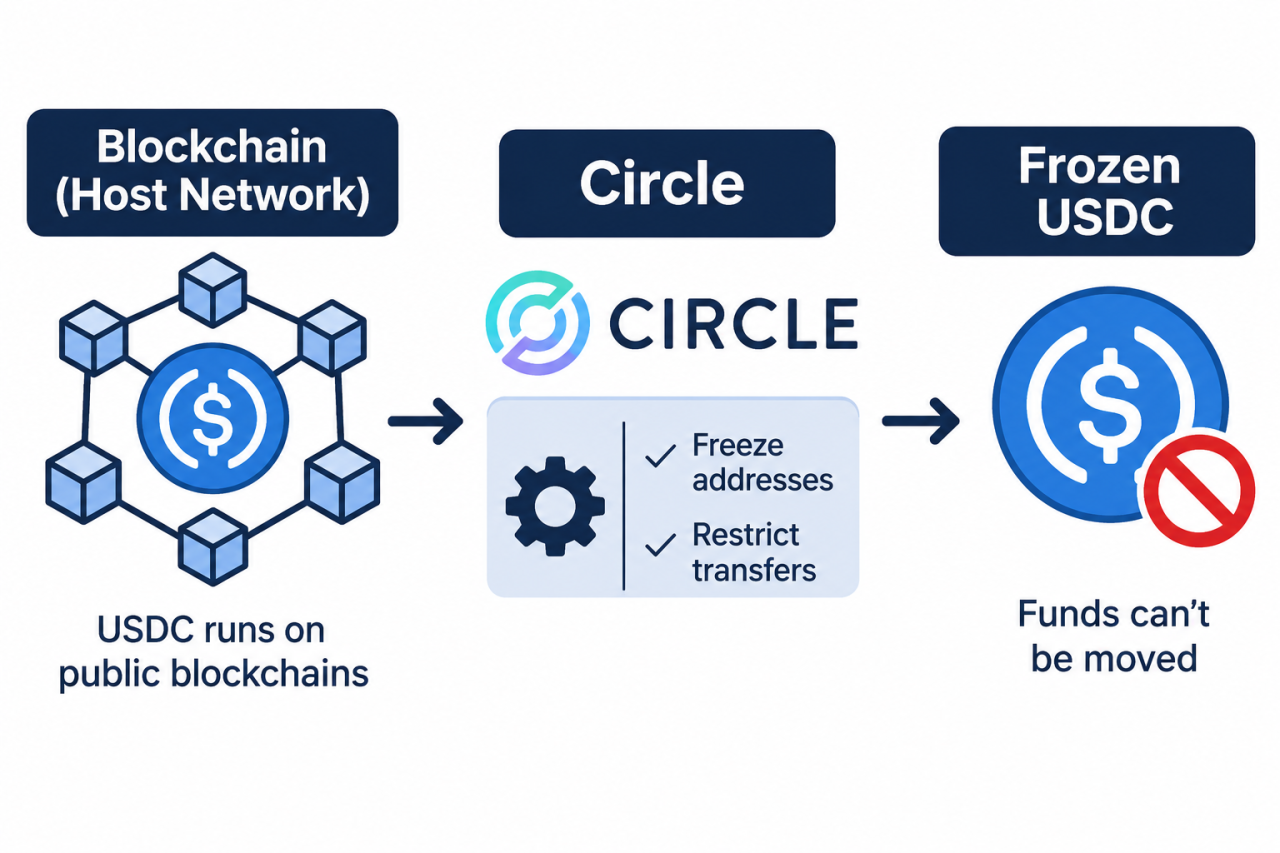
After the Oct. 29, 2026, Binance breach, Tether froze more than $1.5 billion in USDT within about half an hour. The FBI linked the roughly $6.3 billion breach to North Korea-linked hackers. In the same case, the U.S. Justice Department sought forfeiture of more than $1.1 billion in USDC across 36 addresses on 18 blockchains. Circle, the USDC issuer, could not move the frozen tokens and agreed to issue an equivalent amount to the government if a judge orders forfeiture. That agreement is not a payment to victims.
Waiting for a court order carries risks of its own. During the $285 million Drift exploit in April 2026, attackers moved about $232 million in USDC across blockchains while Circle waited for an order. More than 100 investors are suing the company over its response.
USDT and USDC together account for about 86% of the stablecoin market. Section 18 of the U.S. GENIUS Act requires the technological capability to comply with lawful orders involving regulated dollar tokens. The Office of the Comptroller of the Currency’s rule takes effect Jan. 18, 2027. Separately, Treasury’s FinCEN and OFAC have proposed treating permitted issuers as financial institutions under the Bank Secrecy Act, with sanctions and anti-money-laundering programs.
The ability to comply with a freeze order answers an enforcement question: can the issuer stop the funds from moving? It does not settle competing claims or tell a holder what recovery will cost. For a theft victim such as Bittok, those unanswered questions determine whether a freeze ever becomes a repayment.